6 swing check valves are crucial in numerous mechanical settings. For engineers, plant supervisors, and acquisition specialists, this point-by-point book analyzes the plans, applications, and industry guidelines for 6 swing check valves. We will explore what makes these valves diverse from standard check valves, see how they progress stream control in different circumstances, and conversation around the vital fabric requirements and industry benchmarks that make them dependable and compelling. If you are arranging to overhaul the current framework or construct a modern pipeline framework, this article will offer assistance you get it and select the best 6 swing check valves.
What Makes 6 Swing Check Valves Distinctive from Standard Check Valves?
Size and Stream Capacity
6 swing check valves are outlined to handle larger stream volumes compared to smaller check valves. The 6-inch breadth permits expanded stream capacity, making these valves perfect for medium to large-scale mechanical applications. This measure offers an adjustment between stream proficiency and compact plan, fitting well in different pipeline setups without relinquishing performance.
Design Features
The plan of 6 swing check valves includes a few special features that enhance their usefulness. The bigger plate and pivot gathering are built to withstand higher weights and stream rates while keeping up smooth operation. Numerous 6-inch models also highlight fortified body development to guarantee toughness in demanding situations. Moreover, the expanded estimate permits more exact machining of seating surfaces, resulting in advanced fixing capabilities.
Installation and Maintenance Considerations
Installing and keeping up 6 swing check valves requires particular contemplations due to their size and weight. These valves frequently require stronger bolster structures and may require specialized lifting hardware during installation or maintenance. In any case, their bigger size can moreover streamline upkeep methods, as internal components are more open compared to smaller valves. Numerous 6-inch models include plan components that encourage simpler assessment and cleaning, such as detachable caps or access ports.
Typical Applications and Flow Control Advantages of Swing Check Valves
Water Treatment and Conveyance Systems
In water treatment offices and metropolitan conveyance systems, 6 swing check valves play a significant part in preventing backflow and keeping up the system's integrity. These valves are regularly introduced at pump release focuses to avoid backflow when pumps are closed down. Their dependable operation makes a difference, securing costly hardware and guaranteeing the steady conveyance of clean water to end-users. The swing check plan permits a negligible weight drop, contributing to the overall framework efficiency.
Industrial Process Lines
Various businesses depend on 6 swing check valves for proficient stream control in handling lines. Chemical plants utilize these valves to anticipate backflow of reactive substances, guaranteeing security and product quality. In the oil and gas division, swing check valves are fundamental components in pipeline frameworks, securing pumps and preventing contamination between different item streams. The strong development of 6-inch models makes them reasonable for dealing with high-pressure liquids and slurries commonly found in mechanical applications.
Fire Protection Systems
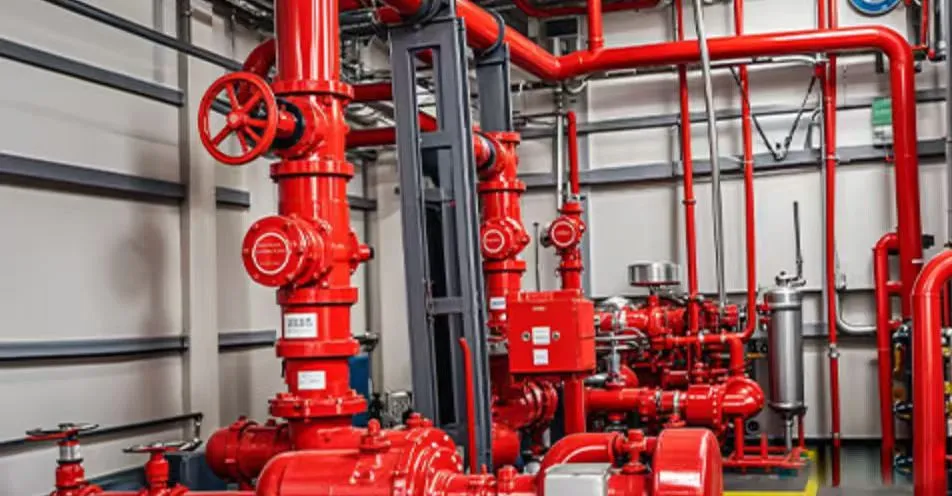
Fire assurance frameworks regularly join 6 swing check valves to keep up legitimate water pressure and prevent backflow. These valves are ordinarily introduced at the release of fire pumps, guaranteeing that water streams as planned in the planning heading during crises. The quick-closing activity of swing check valves is pivotal in these applications, as it anticipates water pound impacts that may harm channeling frameworks. The unwavering quality and maintenance needs of 6-inch swing check valves make them a perfect choice for fire assurance infrastructure.
Industry Standards and Material Specifications for 6 Swing Check Valves
ASME and API Standards
The American Society of Mechanical Engineers (ASME) and the American Petroleum Institute (API) have set up thorough benchmarks for the design, fabrication, and testing of swing check valves. ASME B16.34 gives rules for pressure-temperature evaluations, materials, and measurements of flanged, strung, and welding end valves. API 6D particularly addresses pipeline valves, including swing check valves utilized in oil and gas applications. Compliance with these guidelines guarantees that 6 swing check valves meet the execution and security necessities of different industries.
Material Selection Criteria
Selecting the fitting materials for 6 inch valve is pivotal for guaranteeing life span and execution in particular applications. Common body materials incorporate cast press, pliable press, carbon steel, and different grades of stainless steel. The choice depends on components such as working weight, temperature, and the corrosiveness of the media. For instance, stainless steel valves are regularly favored in chemical handling and food production due to their amazing corrosion resistance. The plate and situate materials must moreover be carefully chosen to withstand wear and give a tight seal. Producers regularly offer alternatives like bronze, stellite, or elastomer-lined plates to meet differing application requirements.
Testing and Certification Requirements
To guarantee unwavering quality and compliance with industry benchmarks, 6 swing check valves experience thorough testing methods. Hydrostatic shell tests confirm the valve body's judgment beneath weight, whereas situate spillage tests affirm the valve's capacity to avoid backflow. Numerous applications require extra certifications, such as NSF/ANSI 61 for consumable water frameworks or API 6D monogram for oil and gas pipelines. These certifications include intensive reviews of fabricating forms and quality control frameworks. End-users ought to continuously confirm that the valves they select have undergone suitable testing and hold pertinent certifications for their intended application.
Conclusion
6 swing check valves are crucial components in various mechanical applications, providing dependable backflow prevention and productive stream control. Their special plan highlights, coupled with adherence to exacting industry benchmarks, make them a favored choice for engineers and plant directors. By understanding the particular focal points, applications, and fabric considerations of these valves, experts can make educated choices that improve system performance and life span. As innovation progresses, producers proceed to improve, making strides in the proficiency and unwavering quality of 6 swing check valves to meet the advancing requests of cutting-edge mechanical processes.
FAQs
What is the essential work of a 6 swing check valve?
The essential work is to anticipate backflow in pipelines, guaranteeing one-way liquid movement.
Can 6 swing check valves be introduced vertically?
Yes, they can be introduced both evenly and vertically, depending on the particular application requirements.
What materials are commonly utilized for 6 swing check valves?
Common materials incorporate cast press, stainless steel, and carbon steel, chosen based on the application and liquid properties.
How often should 6 swing check valves be inspected?
Inspection recurrence depends on the application, but by and large, yearly assessments are prescribed to guarantee legitimate functioning.
Your Trusted Partner for Quality 6 Swing Check Valves | FLA Industrial
At FLA Mechanical &; Exchanging Co., Ltd., we specialize in fabricating high-quality 6 swing check valves that meet the most demanding industry measures. With about 40 a long time of experience and a commitment to development, we offer solid arrangements for your stream control needs. Our progressive innovation and strict quality administration guarantee that each valve we create conveys exceptional performance. Believe in our skill to give you the right valve for your application. Contact us at sales@flaindustrial.com to talk about your prerequisites and involve our predominant client service.
References
American Society of Mechanical Engineers. (2017). ASME B16.34-2017: Valves Flanged, Threaded, and Welding End.
American Petroleum Institute. (2014). API Specification 6D: Specification for Pipeline and Piping Valves.
Batra, M. K., & Kiran, A. (2019). Swing Check Valve Design and Analysis: A Comprehensive Review. Journal of Fluid Flow, Control and Measurement, 6(2), 45-62.
National Fire Protection Association. (2021). NFPA 20: Standard for the Installation of Stationary Pumps for Fire Protection.
Smith, J. R., & Johnson, L. K. (2018). Material Selection for Industrial Valves: Balancing Performance and Cost. Industrial Engineering Quarterly, 42(3), 78-95.
Water Research Foundation. (2020). Best Practices for Valve Selection and Maintenance in Water Distribution Systems. Denver, CO: Water Research Foundation.