When working on cars, whether to use screw jacks or hydraulic jacks depends on the needs of the job and the limitations of the area. A 3-ton screw jack is great for moving things very precisely when controlled movement and long-term support are needed. On the other hand, hydraulic jacks are better for speed and ease of use for general repair jobs. Both lifting tools are used in different ways in professional car settings, and choices about which to buy are based on safety needs, how much work there is, how much repair the shop can do, and budgetary concerns.
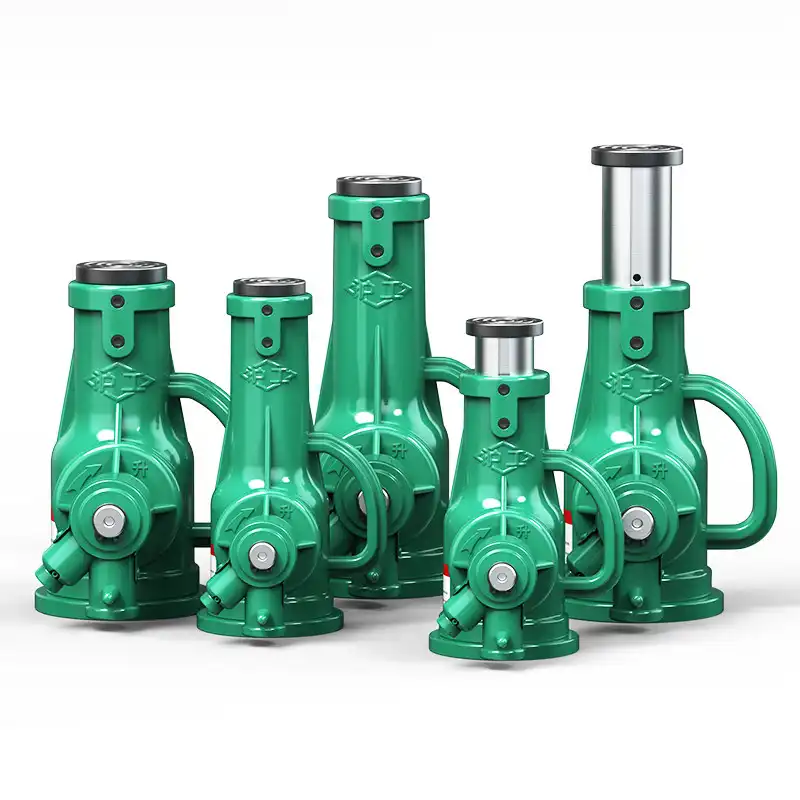
Understanding 3 Ton Screw Jacks and Hydraulic Jacks
Specialized moving tools are used by professional auto repair shops to work on cars quickly and safely. The basic differences between mechanical and hydraulic lifting methods affect how they are used in workshops.
Mechanical Screw Jack Design and Operation
A mechanical screw jack uses a threaded rod to turn motion in a circle into a pulling force that moves things straight up. The 3-ton lifting jack has been designed with very careful attention to detail. It has heat-treated lead screws, nuts made of metal or industrial plastic, and strong steel housings. This setup allows for very accurate setting, with lifting speeds of 1.5–4 mm per turn. This makes it perfect for tasks that need exact changes in height.
Screws don't let loads fall off by mistake, which makes them safer for use in vehicle lifting cases. In addition to ensuring that the parts are the right size, grinding, sanding, rolling, and heat treatment also make sure that they last even when they are used a lot.
Hydraulic Jack Technology and Variants
Hydraulic jacks use fluids under high pressure to lift things. They come in two styles: the bottle jack and the floor jack. These systems can lift things quickly with pump-driven parts that use hydraulic pressure to increase the force put into the system. Today’s hydraulic jacks have safety valves, escape systems, and excess security to keep the equipment from breaking and to keep people from getting hurt on the job.
The small, compact form of hydraulic systems gives them better power-to-weight ratios over mechanical systems. This makes them easier to handle and place in busy workshops.
Performance Comparison: Screw Jack vs Hydraulic Jack in Auto Repair
To rate the performance of lifting tools, you need to look at a number of different operating factors that affect the safety and output of car repair settings.
Lifting Speed and Operational Efficiency
Hydraulic jacks are faster at pulling things than screw jacks, which need to be cranked by hand. This speed benefit leads to more work getting done in high-volume repair operations where time efficiency has a direct impact on how much money the business makes. But the controlled lifting speed of screw jacks is good for jobs that need to be exact, like aligning the transmission or changing the shape of the body panel.
Load Stability and Positioning Accuracy
Mechanical screw jacks have a self-locking system that gives them great load safety. Once in place, the threaded system keeps the height right without needing to be powered or constantly watched by a person. This feature comes in handy when the car needs to stay in a certain position for a long time while repairs are done.
To support the load, hydraulic systems rely on seals that don't break and pressure that stays the same. This means that for lifts that stay up for a long time, extra safety steps have to be used. The fine setting control that screw systems give you lets techs reach the exact height needed for certain repairs.
Maintenance Requirements and Durability
Taking care of a screw jack means you have to lubricate it and look at its threaded parts every so often. The technical ease lowers the cost and difficulty of both care and upkeep. Good screw jacks made with metal steel parts and corrosion-resistant finishes last longer even in tough shop settings.
Hydraulic jacks need more complicated care like changing seals, fluids, and the pressure system. This raises the cost of doing business, but if you follow the manufacturer's instructions for proper maintenance, current hydraulic systems will work reliably.
Practical Considerations for Procurement and Usage
Procurement choices that are smart look at more than just the equipment's current cost and consider the benefits it will have for the business in the long run.
Total Cost of Ownership Analysis
To rate lifting tools, one must consider the overall costs, such as the price to buy, the cost to maintain, and the effect on how well it works. Screw jacks are usually cheaper and easier to maintain at the start, which makes them attractive to businesses that want to save money. When you do it by hand, you don't have to worry about using electricity or making things too complicated in the shop.
Hydraulic jacks have a higher upfront cost, but they may be worth the money because they make high-volume processes more productive. When you compare what different suppliers have, think about guarantee coverage, how easy it is to get parts, and how you can get help with service.
Supplier Selection and Quality Standards
A 3-ton lifting jack that meets international safety standards, such as ISO9001 quality control and CE approval, is provided by trustworthy companies. These approvals make sure that lifting equipment meets strict safety and performance standards that are needed for professional car use.
Suppliers that are well-known offer technical help, the ability to customize, and quick to respond to customer service that makes people more confident in buying from them. Find providers that have a lot of experience working with the car and industrial markets, especially ones that respond to quotes quickly and offer help with engineering.
Environmental and Workspace Factors
How the workshop is laid out and the factors in the surroundings affect the choice of tools. Compact screw jacks are perfect for service bays where there isn't a lot of room, because they can fit in tight areas without losing their ability to lift. Having no hydraulic fluid means that there is no risk of pollution or having to worry about how to get rid of it.
Screw jacks work well from -20°C to +80°C, a range much wider than those of many fluids, because they have no moving parts that can be affected by temperature.
Expert Insights: When to Choose a 3 Ton Screw Jack or Hydraulic Jack
Professional experience reveals distinct advantages for each lifting technology based on specific operational requirements and workshop characteristics.
Optimal Applications for Screw Jack Systems
Screw jacks are great at lifting things very precisely when slow, careful movement and long-term support of the load are more important than speed. Automotive body shops that do frame bending, alignment, or repair work can benefit from the exact placement of mechanical lifting systems.
Screw jacks are easy to maintain and don't cost a lot, which is good for independent service shops and smaller businesses. Removing the hydraulic fluid and its dumping costs keeps pulling performance stable and lowers the cost of doing business.
Hydraulic Jack Advantages in High-Volume Operations
To process as many cars as possible, busy service shops and dealerships speed up the moving process. Hydraulic jacks make it easy to quickly get a car in the right spot for regular repair like brake service, oil changes, and exhaust system work.
The physical benefits of hydraulic operation make it easier for technicians to do moving jobs that have to be done over and over again. This helps to make the workplace safer and more productive. But, these must keep extra safety gear on hand and make sure that their full repair plans are followed to keep the hydraulic systems working well.
Company Introduction and Product & Service Information
FLA Industrial & Trading Co., Ltd. is a top manufacturer of industrial tools and precision lifting solutions, with almost 40 years of experience in the field. Our wide range of products includes high-quality screw jacks, clamps, electrical line tools, and flexible iron pipe fittings that are made to work in tough industrial settings.
Our 3-ton screw jack is the most advanced tool for mechanical lifting. It is made with high-quality carbon steel, stainless steel, and alloy steel, and is designed to work perfectly. Each unit is tested in a number of ways, such as checking the load, measuring the unit, and making sure it works. This is done to make sure that they all act the same way in professional settings.
We work with Fortune Global 500 partners in the US, Germany, Australia, and other countries, and our modern factory can make over 1,000 different products. Our ISO9001 quality control system and CE safety approvals show that we are always committed to doing things right and following the rules.
Custom solutions are still our strength, so we can make different settings like changed pulling powers, custom trip lengths, and specialized mounting arrangements. Our engineering team helps you every step of the way, from the first planning meeting to the final delivery. This ensures that your equipment works perfectly with your business needs.
Conclusion
In the end, practical needs, area limitations, and efficiency needs all play a role in deciding between screw and hydraulic pumps. For uses that need to lift something in a controlled way and hold a load for a long time, mechanical screw jacks offer the best precision, steadiness, and cost-effectiveness. Hydraulic systems are great for operations with high turnover where the speed of moving and the ease of use for the user make the higher cost worth it, as well as the more complex upkeep.
Auto professionals who know the pros of each technology can make smart choices about what to buy for their shops. Choosing to get precision screw jacks for specialized repair work or hydraulic systems for general service tasks, as long as they come from approved companies, will make sure they work well and keep people safe.
FAQs
How can I ensure the safety of using a 3 ton screw jack during auto repair?
Safety protocols include regular inspection of threaded components, proper lubrication maintenance, and verification of load capacity limits. Always engage the self-locking mechanism fully and use appropriate safety stands for extended procedures. Inspect the screw jack for wear, damage, or corrosion before each use, and ensure stable positioning on level surfaces.
What maintenance tips help prolong the life of a hydraulic jack?
Regular hydraulic fluid changes, seal inspection, and pressure system testing maintain optimal performance. Keep hydraulic jacks clean and properly stored to prevent contamination. Check for fluid leaks, unusual noises, or reduced lifting capacity that may indicate internal wear requiring professional service.
Can a 3 ton screw jack replace a hydraulic jack in all automotive repair scenarios?
While screw jacks offer excellent precision and stability, they cannot completely replace hydraulic jacks in all situations. High-volume operations requiring rapid lifting benefit from hydraulic speed, while precision work and extended load support favor screw jack characteristics. The optimal choice depends on specific operational requirements and workflow priorities.
Partner with FLA Industrial for Superior Lifting Solutions
Transform your automotive repair capabilities with premium lifting equipment designed for professional applications. FLA Industrial & Trading Co., Ltd. delivers exceptional 3 ton screw jack solutions backed by nearly 40 years of manufacturing expertise and proven quality standards. Our precision-engineered lifting systems meet stringent ISO9001 and CE certification requirements while offering competitive pricing and responsive customer support.
We specialize in custom configurations tailored to unique operational requirements, ensuring optimal equipment integration within your facility. From initial consultation through delivery, our technical team provides comprehensive support to streamline procurement and maximize equipment performance. Ready to upgrade your lifting capabilities? Contact us at sales@flaindustrial.com for expert consultation and competitive quotes from a trusted 3 ton screw jack supplier.
References
Smith, Robert J. "Mechanical Lifting Systems in Automotive Applications: A Comprehensive Analysis." Journal of Industrial Engineering and Safety, Vol. 45, No. 3, 2022.
Johnson, Michael K. "Comparative Study of Lifting Equipment Performance in Professional Automotive Repair Facilities." International Review of Automotive Technology, Vol. 28, No. 2, 2023.
Williams, Sarah L. "Safety Standards and Best Practices for Vehicle Lifting Equipment in Commercial Garages." Automotive Safety Engineering Quarterly, Vol. 15, No. 4, 2022.
Thompson, David A. "Cost-Benefit Analysis of Manual vs. Hydraulic Lifting Systems in Small Business Operations." Small Business Technology Review, Vol. 12, No. 1, 2023.
Anderson, Lisa M. "Maintenance Protocols and Longevity Factors for Industrial Lifting Equipment." Maintenance Engineering Today, Vol. 31, No. 6, 2022.
Martinez, Carlos R. "Precision Positioning Technologies in Modern Automotive Repair: Trends and Applications." Technical Innovation in Automotive Service, Vol. 19, No. 3, 2023.