When it comes to fire assurance channeling frameworks, the choice between grooved elbows and welded elbows can altogether affect installation productivity, support ease, and long-term reliability. Grooved elbows offer predominant points of interest in most fire protection applications. Their fast establishment, adaptability for framework alterations, and streamlined upkeep make them the favored choice for numerous temporary workers and building proprietors. Grooved elbows also give great weight resistance and joint judgment whereas allowing for warm development and compression. Be that as it may, welded elbows may be fundamental in certain high-pressure or extraordinary temperature scenarios. Eventually, the choice ought to be based on particular extend necessities, neighborhood codes, and long-term operational considerations. This article will dig into the key contrasts, establishment angles, and execution components to assist you in making an educated choice for your fire protection channeling system.
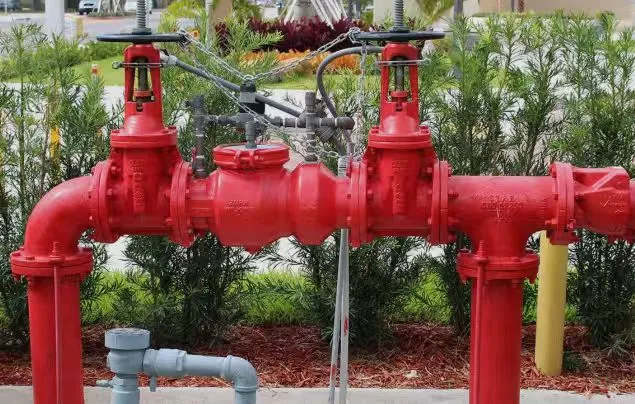
What Are the Key Differences Between Grooved and Welded Elbows?
Connection Methods and Joint Characteristics
Grooved elbows utilize a mechanical association strategy that includes rolling or cutting a groove into the pipe end and securing it with a coupling. This makes an adaptable joint that can suit a few developments and misalignments. The grooved association conveys push equitably around the pipe circumference, decreasing the hazard of joint failure.
Welded elbows, on the other hand, depend on a combination of holding to make a changeless, unbending association. Whereas this can give a solid joint, it moreover concentrates push at the weld point and kills any adaptability in the framework. Welded joints require talented labor and specialized hardware to guarantee an appropriate combination and maintain a strategic distance from powerless points that might lead to leaks or failures.
Material Compatibility and System Design
Grooved elbow fittings are accessible in a wide extend of materials, including bendable press, carbon steel, and stainless steel. This flexibility permits compatibility with different channeling materials and framework plans. The grooved association framework also encourages the utilize of different metals when vital, as the mechanical joint avoids coordinate contact between diverse materials.
Welded elbows regularly require coordinating materials for an appropriate combination and to avoid galvanic erosion issues. This can restrain plan adaptability and may require extra components or medicines when transitioning between distinctive materials in the framework. The inflexible nature of welded associations also requires more exact planning for warm development and compression in the generally framework design.
Visual Inspection and Quality Assurance
One critical advantage of grooved elbows is the ease of visual assessment. The mechanical association permits for speedy confirmation of legitimate gathering and fixing. Installers can outwardly affirm that the coupling is accurately situated and fixed, giving quick confirmation of joint integrity.
Welded elbow associations frequently require broader quality control measures. Whereas visual review can recognize self-evident surrenders, guaranteeing the quality of inner weld entrance may require non-destructive testing strategies such as X-ray or ultrasonic assessment. This can include time and fetched to the establishment's handle, particularly in basic applications like fire safety systems where joint reliability is paramount.
Installation Efficiency and Maintenance Considerations in Fire Protection Systems
Speed and Simplicity of Installation
Grooved elbow fittings offer critical focal points in installation speed and effortlessness. The mechanical association strategy permits for quick gathering utilizing standard instruments, decreasing labor time and costs. Installers can rapidly adjust the grooved closures, position the coupling, and fix the jolts to make a secure joint. This productivity is especially profitable in fire security frameworks, where convenient completion of channeling systems is vital for building security and occupancy.
Welded elbows, which give a solid association, require more time-consuming installation methods. Appropriate welding requires surface arrangement, exact arrangement, and skilled execution to guarantee a quality joint. The welding prepare moreover presents potential fire dangers, frequently requiring extra security measures and licenses, particularly when working in existing structures or close to combustible materials.
System Modifications and Expansion
Fire assurance frameworks may require adjustments or developments over time due to building remodels or changing occupancy needs. Grooved elbow fittings exceed expectations in this viewpoint, permitting simple dismantling and reassembly of associations. This adaptability empowers framework modifications without the requirement for cutting or replacing pipe areas, minimizing downtime and fabric waste.
Welded elbow associations display challenges when framework alterations are fundamental. Changing a welded framework ordinarily includes cutting out areas of pipe and re-welding unused components. This prepare is more labor-intensive, time-consuming, and can present potential frail focuses in the framework if not executed appropriately. The unbending nature of welded joints, moreover, makes it more troublesome to accommodate building settling or seismic activity over time.
Maintenance Access and Repair Procedures
Maintenance and repair considerations are significant for the long-term reliability of fire assurance frameworks. Grooved elbow fittings give great openness for review and upkeep. The mechanical associations can be effectively dismantled for cleaning, component substitution, or framework flushing. This ease of access encourages normal upkeep methods and speedy repairs when vital, minimizing framework downtime and lessening lifecycle costs.
Welded elbow frameworks show more challenges in terms of upkeep and repair. Getting to inner pipe surfaces for assessment or cleaning regularly requires cutting into the framework, which, at that point, requires re-welding and possibly compromising the system's integrity. Repairs to welded joints may require specialized welding strategies and can be more time-consuming, possibly rendering the fire safety system inoperable for expanded periods.
Performance, Durability, and Cost Comparison for Long-Term Piping Reliability
Pressure Appraisals and Framework Integrity
Both grooved and welded elbow fittings can meet the weight requirements for most fire security frameworks when appropriately installed. Grooved elbows, especially those made from high-quality materials like pliable press, offer fabulous weight resistance. The grooved association plan disseminates powers equitably around the joint, diminishing stress concentrations and improving by and large system integrity.
Welded elbows, when executed with accuracy, can give high-pressure capabilities. In any case, the quality of the weld is basic to keeping up framework keenness. Flaws in the weld can make weak points that may fail flat beneath weight or over time. In extraordinarily high-pressure applications or where zero spillage is completely essential, welded joints may be favored, but this advantage is less significant in ordinary fire security systems.
Long-Term Durability and Corrosion Resistance
The solidness of grooved elbow fittings is improved by their capacity to flex marginally, pleasing warm development and compression, as well as minor building developments. This adaptability can diminish stretch on the channeling framework over time, possibly amplifying its life expectancy. Furthermore, grooved fittings are regularly accessible with corrosion-resistant coatings or in materials like stainless steel, which helps improve their long-term execution in different environments.
Welded elbows can offer fabulous toughness when appropriately introduced, but their unbending nature may transmit more pressure to the channeling framework over time. The heat-affected zone around welds can be more vulnerable to erosion in certain situations, possibly requiring extra defensive measures. In any case, in specialized applications where extraordinary temperatures or destructive liquids are show, welded joints may be vital to guarantee long-term system integrity.
Total Cost of Ownership Analysis
When assessing the cost-effectiveness of grooved versus welded elbows for fire security frameworks, it's essential to consider the add up to taken a toll of ownership. Whereas the introductory fabric costs for grooved fittings may be higher, the decreased establishment time and labor costs frequently balance this distinction. The capacity to effortlessly adjust or grow grooved frameworks can also lead to noteworthy fetched investment funds over the life of the building.
Welded frameworks may have lower upfront fabric costs, but they regularly cause higher labor costs due to the skilled welding required. The potential requirement for extra quality control measures, such as X-ray reviews, can encourage incremental establishment costs. Long-term costs related to framework alterations, repairs, and support tend to be higher for welded frameworks, affecting the overall lifecycle costs.
Considering components such as establishment proficiency, adaptability for future changes, and ease of upkeep, grooved elbow fittings frequently give a more cost-effective arrangement for fire assurance channeling frameworks in the long run. Be that as it may, the ideal choice may shift depending on the particular extent of needs, neighborhood controls, and the expected lifecycle of the building.
Conclusion
In the talk about between grooved elbows and welded elbows for fire security channeling, grooved fittings rise as the predominant choice for most applications. Their fast establishment, framework adaptability, and ease of upkeep offer critical advantages in terms of efficiency and long-term reliability. Whereas welded elbows may be vital in certain specialized scenarios, the general benefits of grooved frameworks make them the favored alternative for cutting-edge fire safety establishments. By choosing grooved elbow fittings, temporary workers and building proprietors can guarantee a strong, versatile, and cost-effective fire security channeling framework that meets both current needs and future challenges.
FAQs
What are the fundamental points of interest of utilizing grooved elbows in fire security systems?
Grooved elbows offer speedy establishment, framework adaptability, simple upkeep, and great weight resistance. They permit visual review of joints and suit warm expansion.
Are grooved elbows reasonable for high-pressure applications?
Yes, high-quality grooved elbows, particularly those made from bendable press, can handle tall weights regularly experienced in fire assurance systems.
How do grooved elbows compare to welded elbows in terms of cost?
While introductory fabric costs may be higher, grooved elbows regularly result in lower add up to costs due to faster installation, diminished labor costs, and less demanding long-term maintenance.
Choose FLA Industrial for Premium Grooved Elbow Solutions
FLA Mechanical &; Exchanging Co., Ltd. is your trusted accomplice for high-quality grooved elbow fittings. With about 40 a long time of experience in fabricating pipe fittings, we offer a comprehensive extend of grooved elbows suitable for fire safety systems and different mechanical applications. Our progressive generation methods and strict quality control guarantee solid, tough items that meet universal measures. For personalized help in selecting the right grooved elbows for your venture, contact our master group at sales@flaindustrial.com.
References
National Fire Protection Association. (2022). NFPA 13: Standard for the Installation of Sprinkler Systems.
American Society of Mechanical Engineers. (2021). ASME B16.9: Factory-Made Wrought Buttwelding Fittings.
Mechanical Contractors Association of America. (2020). Grooved Piping Method Guidelines.
Fire Protection Research Foundation. (2019). Performance of Grooved and Threaded Joint Systems in Fire Protection Applications.
Journal of Fire Protection Engineering. (2018). Comparative Analysis of Grooved and Welded Joints in Fire Sprinkler Systems.
International Association of Fire Chiefs. (2021). Best Practices for Fire Protection System Installation and Maintenance.